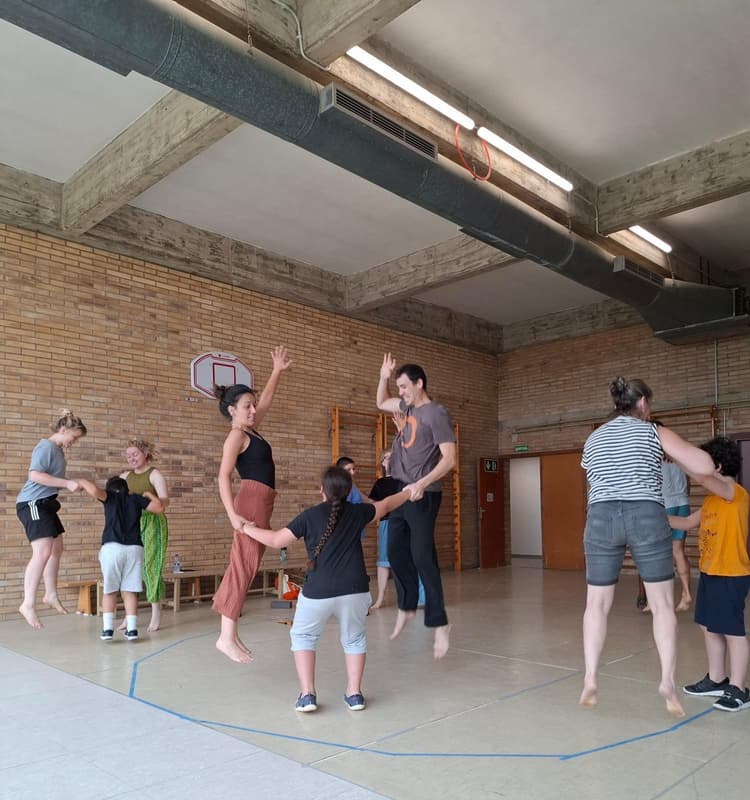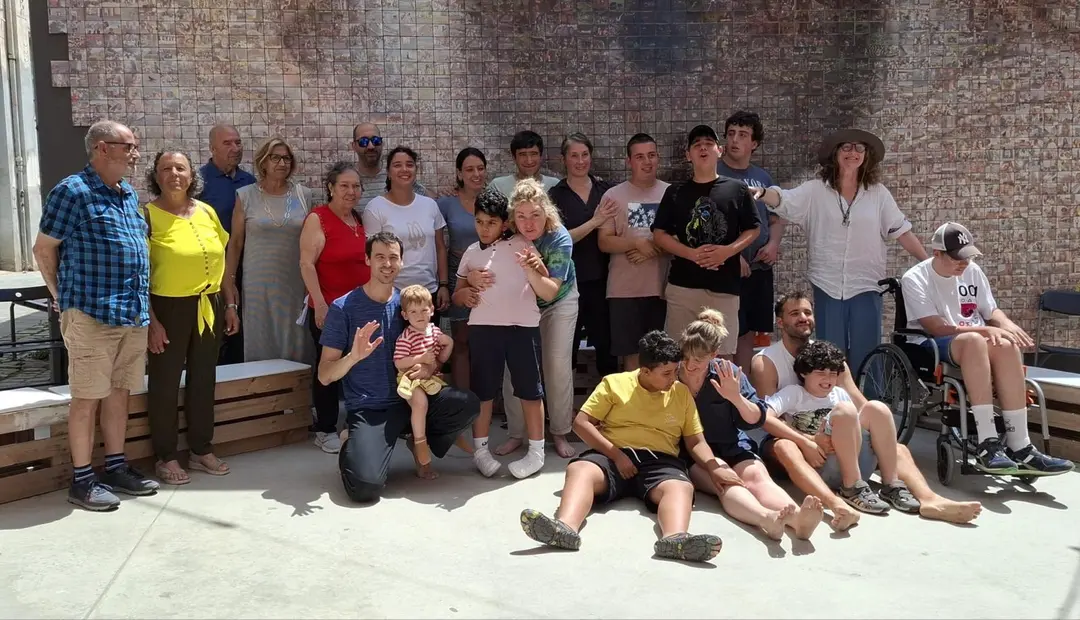
I first directed The Tempest for autistic people in Catalan at Teatre Lliure in Barcelona in 2017 and returned there in 2018 to direct A Midsummer Night's Dream for autistic people. As long as I run Flute Theatre we will continue to perform with our Catalan autistic community as we continue to survive.
During March 2026, Aleix Melé and Alfons Nieto and I led the company, performing La Tempesta in centres around Barcelona with autistic people and their families.
Our performances in March 2026 were supported by Bristol Myers Squibb.
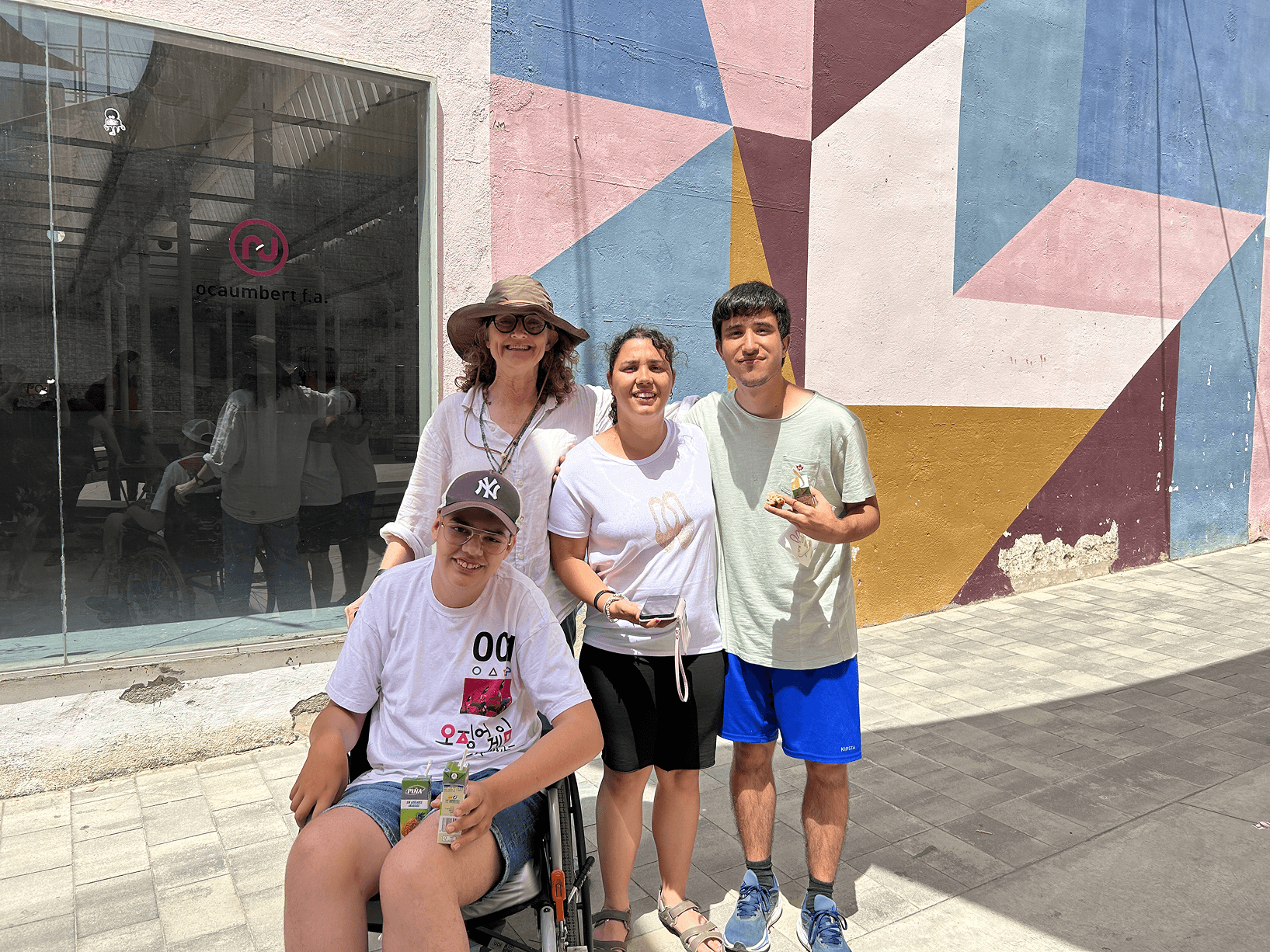
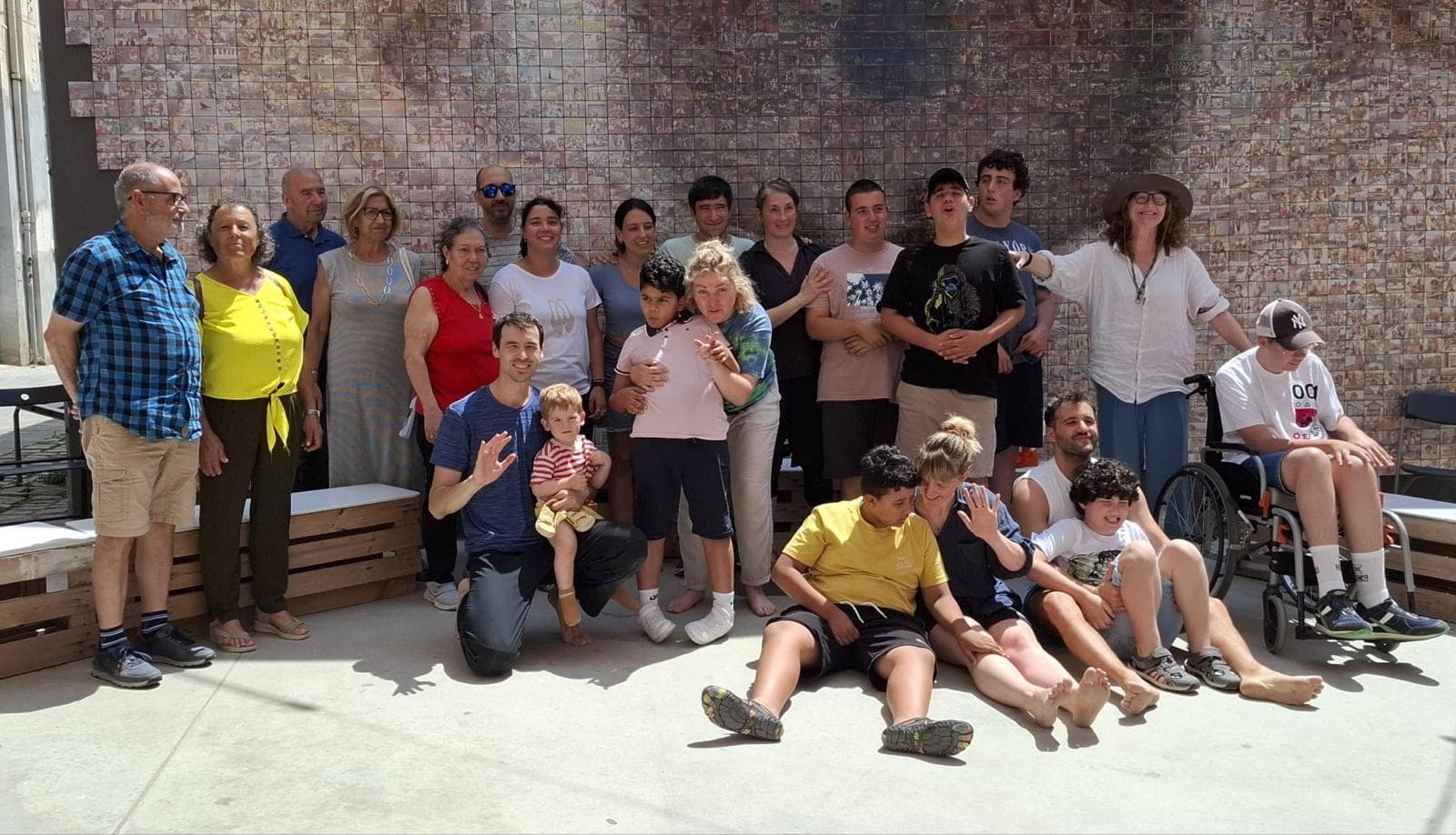
La Tempesta Barcelona 2026
3 photos
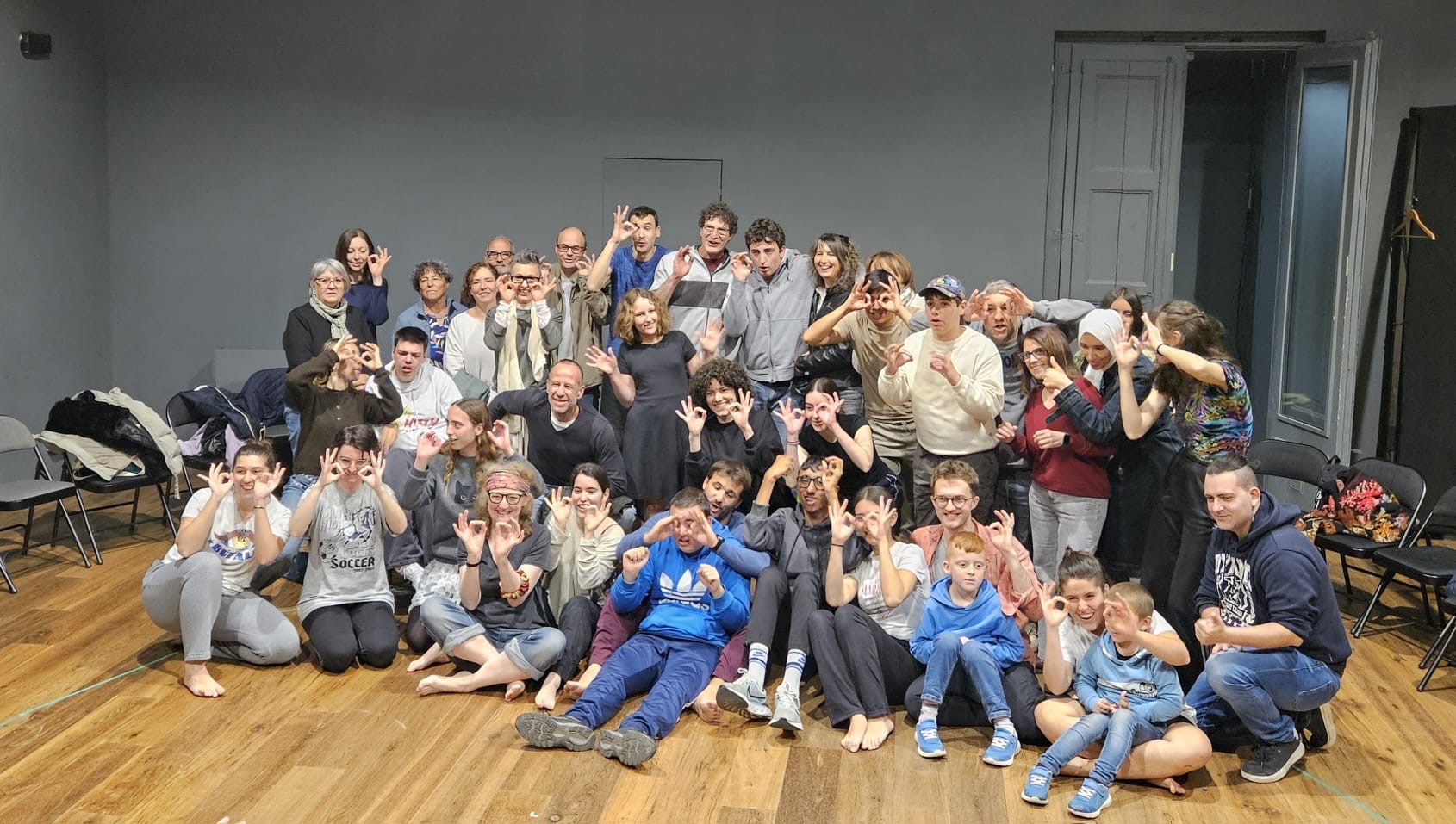
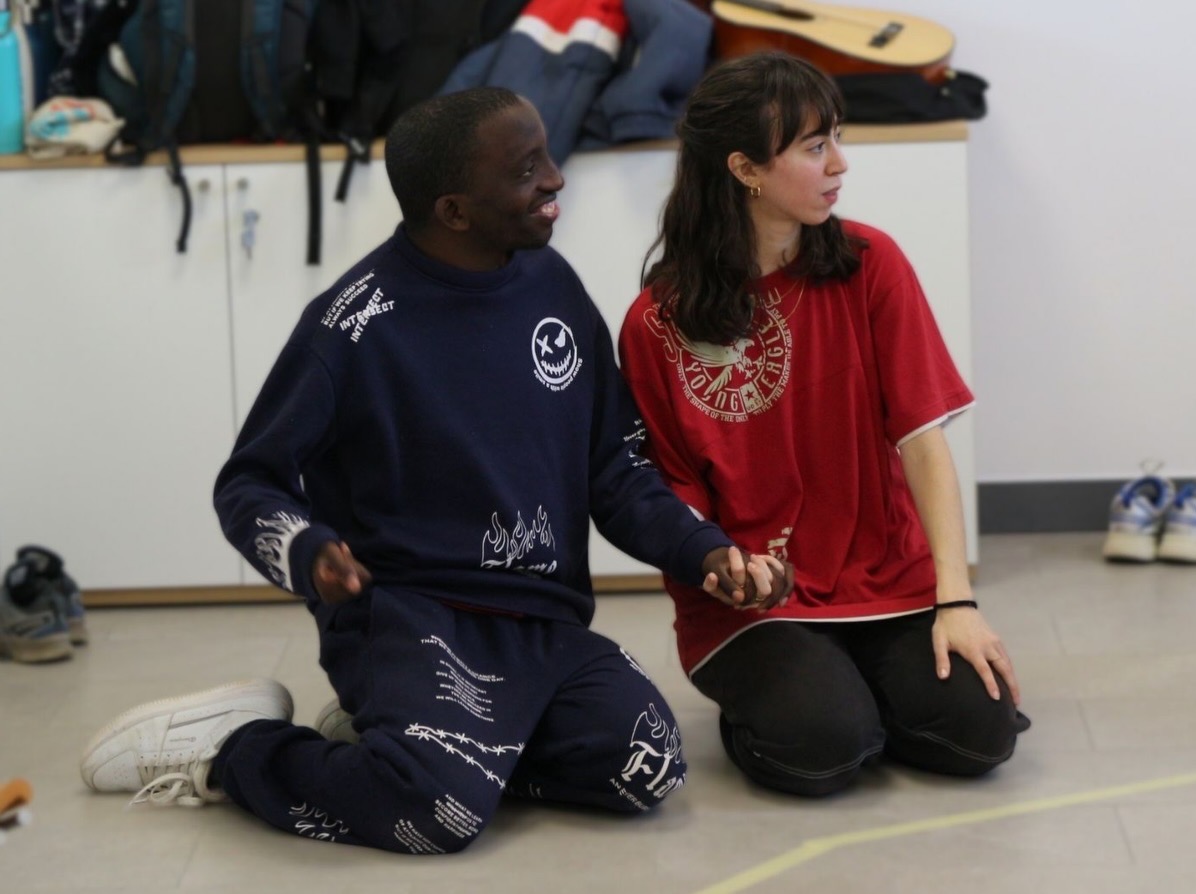
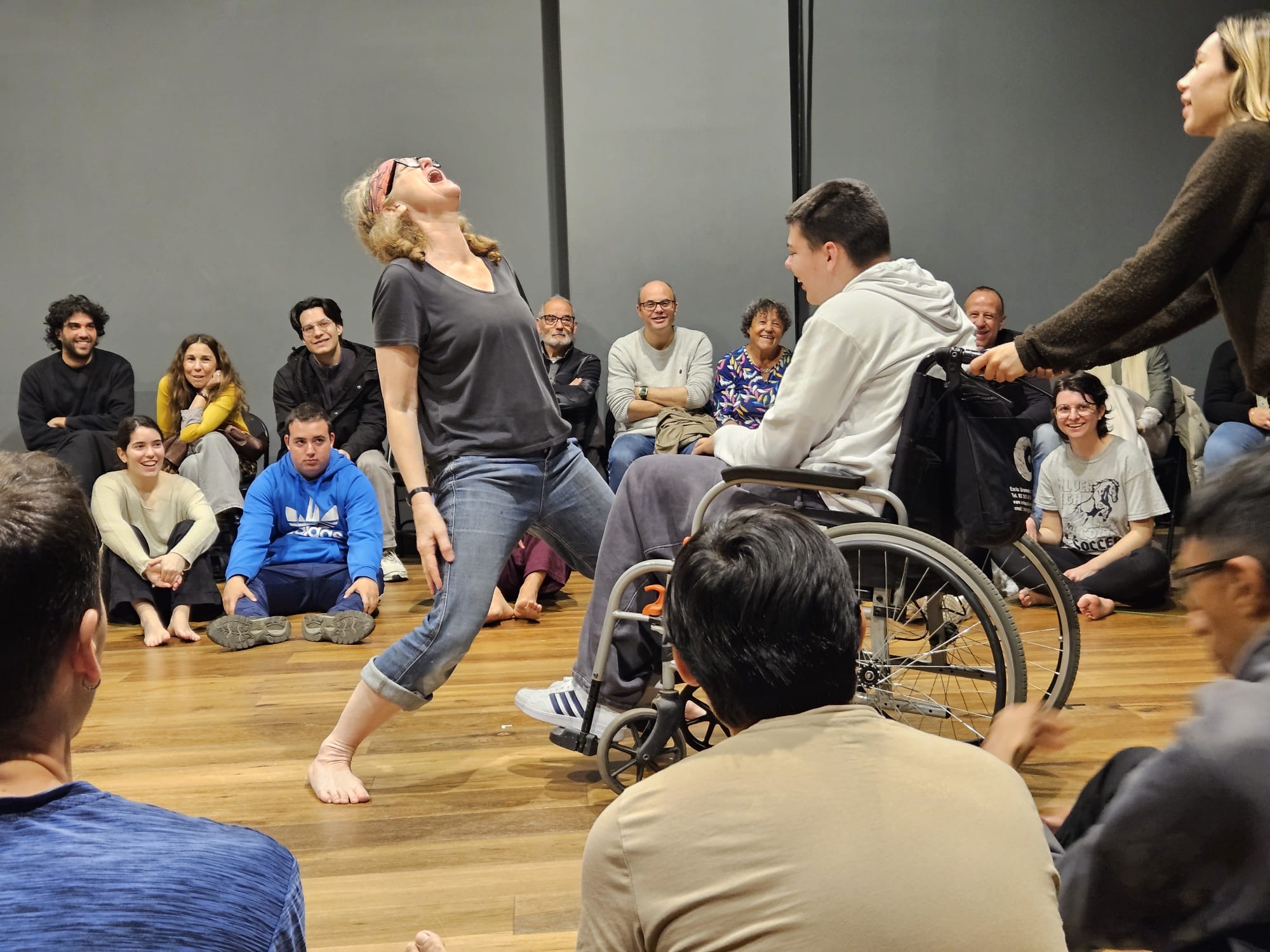
We were joined by some extraordinary actors,
Clara tells her story here:
I still remember when Kelly told us about the rhythm in Shakespeare’s plays and how it had a lot to do with the heartbeat. At first, it seemed warming to me, but I guess I didn’t fully understand the meaning of it, until we started rehearsing The Tempest. As days went by, I realised that every time we said Hola we were just synchronising our hearts to listen and connect with everyone. After that everything we built came naturally, intuitively, easily, as ego was slowly being shadowed by active listening and bonding. I feel everything we did was generating spaces made of different people where each one of us was explaining and belonging to Shakespeare’s play, all of us were Shakespeare, the ones in the spotlight were one with the ones in the margins.
Theatre should be able to be played at any place, even in a small office with bright white lights, an underground gym, a sunny road, or in a dark box with spotlights and chairs. And, quoting Kelly, at places where theatre seems not to have sense to be played is where it should be played the most. No one should be excluded from theatre, as no one should be excluded from life.
This week we didn’t do therapy, we did theatre.
La Tempesta Barcelona 2026
3 photos
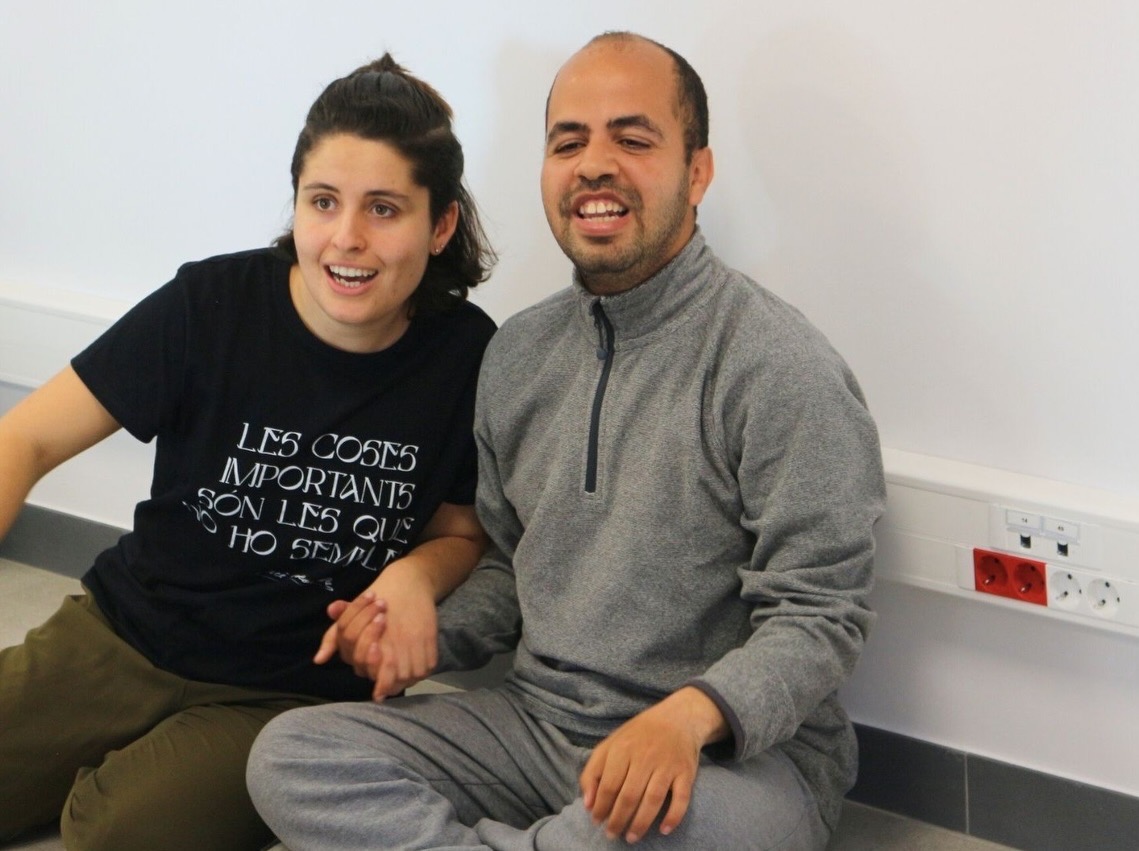
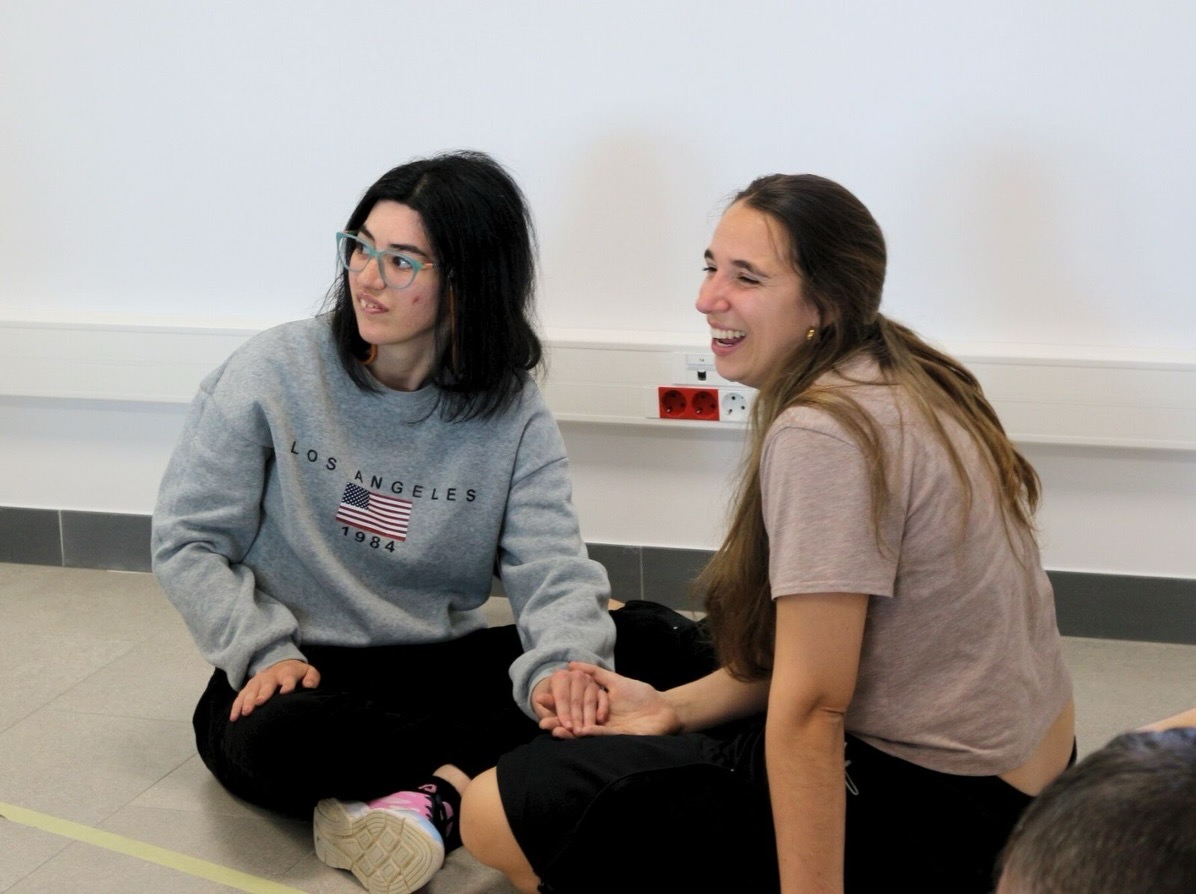
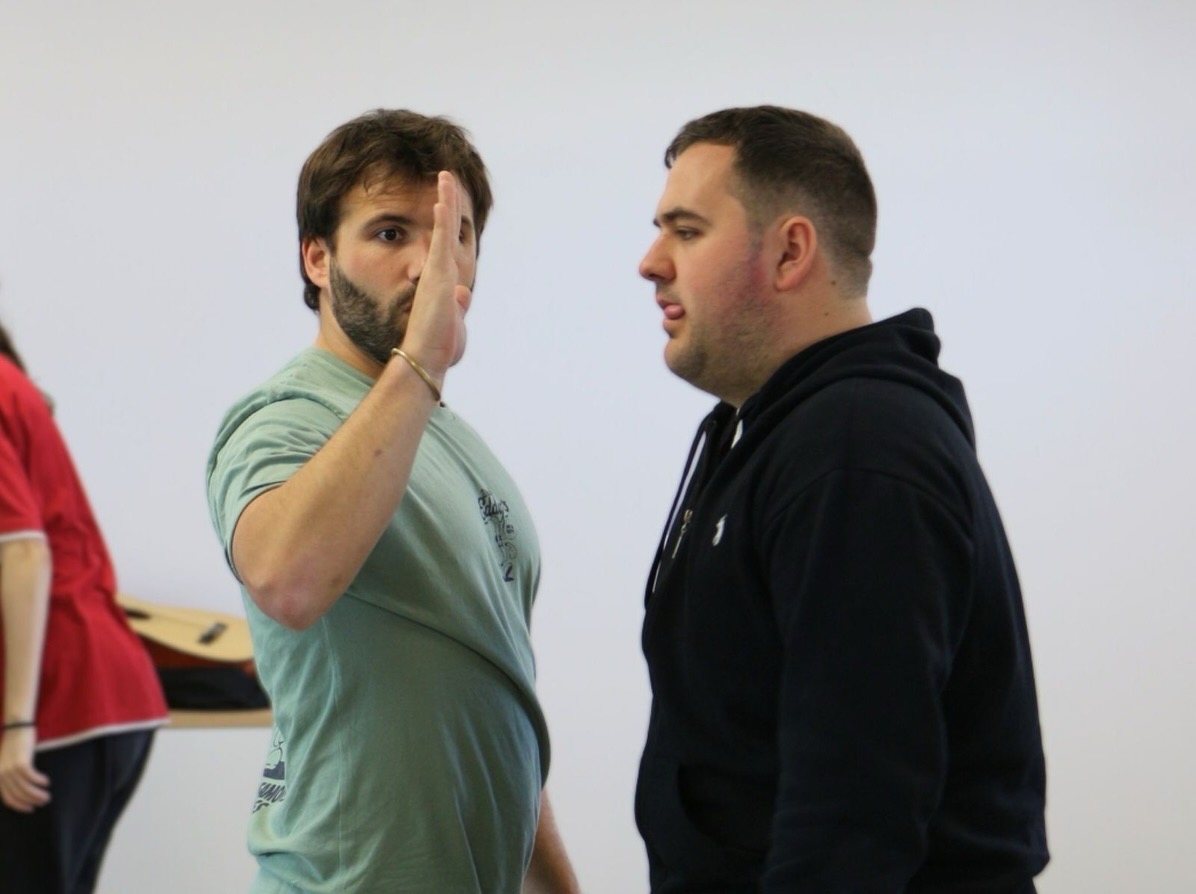
We part from a huge structure so that we can break it and be able to improvise and let ourselves be surprised constantly. And that’s how it was. Every day happened something unexpected; every day we met different people and worked in different spaces; everyday we made different Tempests.
I wanted to share one of the days from my point of view:
Suddenly you meet a child that stays in the margins and eats floor rubbish, and you don’t know why but he grabbed your hand when he was getting into the space, though now he seems not interested at all in anything you do. He traces the floor lines with his finger.
And when you do doyoyoyoing, he laughs.
He traces the floor lines with his finger.
And when you sing, he puts his hands in your neck.
He traces the floor lines with his finger.
And when you tip with him, he smiles.
And you decide to walk with him to the centre of the room to do the tipping with Aleix and Alfons. And again, he seems not interested. Everyone stops paying attention to him, and it is in this precise instant that his repetitive movement changes and he goes straight to the centre. Maybe he just needed 5 more seconds, maybe no one looking at him, or maybe it all was a mere coincidence, but he ended up doing the tipping in the middle of the space.
Once we’ve said our goodbyes he went back to the margins and tracing the floor lines, and after some time I went to talk to other participants. Suddenly, I felt a small finger caressing my foot. It was him tracing my toes with his hand. Again, maybe it all was a mere coincidence, but I felt like we were saying goodbye.
Maybe we didn’t get it all, but all that time we were knowing each other, perhaps inside a huge misunderstanding, but I felt that inside this misunderstanding we were together.
There’s something natural, intuitive, easy in everything we did; it was just being present and sharing; rehearse with opened senses and without taking anything for granted. Life should be it: natural, intuitive, easy; with opened senses and without taking anything for granted.
My substack Essay October 2025
March 2017, Granollers, a town half an hour’s drive from the centre of Barcelona. From the top of the hill, I can see the jagged peaks of Montserrat, the beloved mountain of Catalunya made of asteroid style rock formations, holding an ancient monastery, accessible only by perilous cable car. I want to climb it. I will climb it but not until 2025 after eight years of returning to the hill. At the top of the hill is a special school, Centre D’Educacio Monserrat Montero. Here the autistic children and teenagers are greeted from their buses and taxis by the staff with open arms, receiving hugs and kisses as if it is Christmas every day. How utterly different from schools I have worked in, where at their most extreme, police search for guns and discipline is everything. The combination of the people’s kindness, the scent and colour of the Spring Mimosa with Monserrat on the horizon ensure me I must be dreaming, and I if I should wake, I will cry to dream again.
I’m rehearsing my production of The Tempest with twelve autistic teenagers. I’d made the show in 2014, using games that I’d developed with autistic people since 2002, performing it in English in the UK and the US. Through quirks of fate, the telling of which demand a Substack of their own, now in 2017 I’m invited to create the show in Catalan in collaboration with Teatre Lliure and their company of young actors. Their “Joven Kompanyia Lliure”.
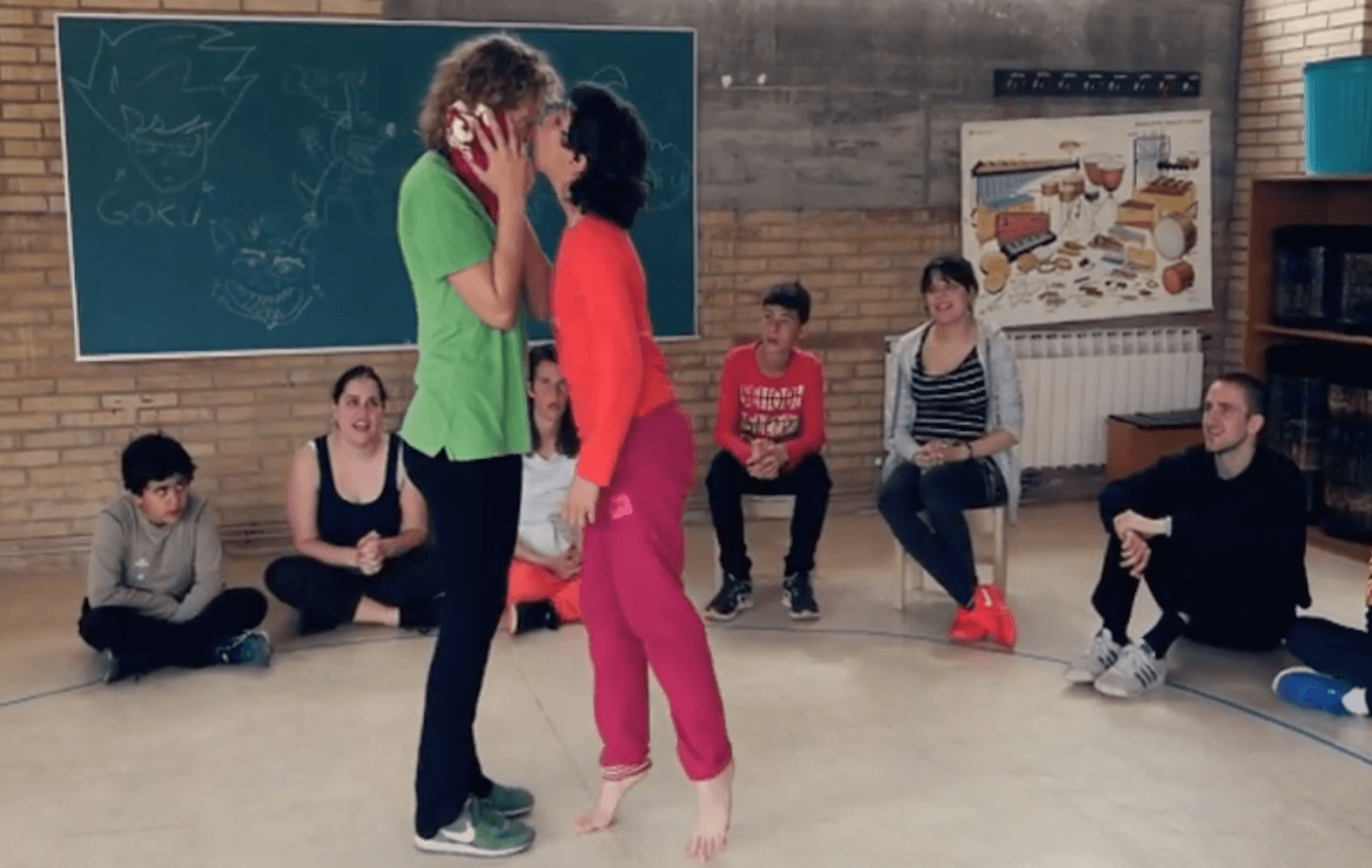
The eight actors play my games with the twelve teenagers and together they make my work fly, they give it wings, they shake it until it ripens in their sun and returns to me with its music, that had been lying dormant and ready, present and clear. They syncopate the rhythms, they sing their own tunes, they find the funny bone where I had only seen the serious. They never ever ask me “Is it OK to touch the participants?’ Their bodies are available, becoming the architecture of the play and the climbing frames for the participants. I’m home, I’m alive, I’m inspired. Anna is twelve years old, she is autistic, and she plays these games as if she has always known them. Her mother films her in her bedroom setting out her toys in a circle and making heartbeats with them, changing their faces and saying Hellos, before her bedtime. Anna asks us to make her a hugging game which I do for my next show and bring it back to her the following year.
We perform the show at the prestigious Teatre Lliure in Montjuic on a Sunday morning with our group of twelve autistic teenagers taking centre stage with the actors. Up till now, I’d insisted that performances (held only in the UK and US at this point) comprised only two audience members per participant, keeping the outer circle of audience small to avoid an overwhelm. The Sunday morning in Barcelona 2017 smashes that idea as, in true Catalan style, families come together to celebrate each other. “Our autistic family member is performing at Teatre Lliure? We’re not missing this”. I’m standing outside the theatre an hour before we start and I see whole groups of families walking toward me. Thay are dressed up for the occasion; mothers, fathers, aunts, uncles, babies, grandparents, siblings and neighbours, at least ten people for each of the participants and then the same amount for each of the actors not to mention the staff at the theatre.
So, we are packed, we could be sold out ten times over, and I learn that it doesn’t matter what the number is, what matters is why that number are there. The listening of everyone in the audience is intense because they need to be there, they want to be there, and they never want to leave. At the end of the performance all the families want to speak to me. But they can’t speak because they are crying so hard, so they hug me. They form a queue to hug me. They hug me because their loved family member has been seen, known, celebrated and adored for the beauty they know them to possess. We have witnessed each person for the unique and incredible attributes they have; we’ve created bonds of trust and rapture that cannot be broken.
Watch Prospero and Caliban Catalan style here
continue reading this article...
You can continue reading the full article here